INNOVATION
Acrylic Finally Gets a Second Life
University of Bath researchers have developed a chemical method that recycles acrylic plastics infinitely with no loss of material quality
17 Jun 2026
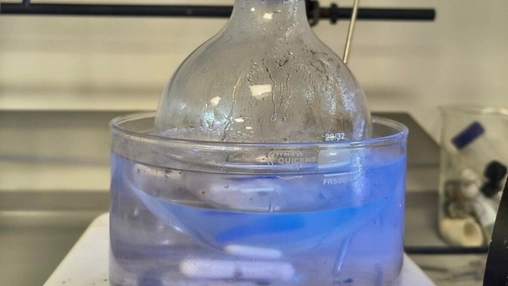
Researchers at the University of Bath have solved one of plastics recycling's most stubborn problems. Their new chemical method recycles acrylic indefinitely without degrading the material, and it works every time.
Published in Nature Communications, the research targets a polymer found in car parts, construction glazing, and display screens. Three million tonnes of acrylic enter global supply chains each year, yet most of it ends up in landfill. That gap has always been the problem.
Dr. Jon Husband, a Research Fellow at Bath's Institute of Sustainability and Climate Change, developed the process using lower temperatures and sustainable solvents. The method breaks acrylic back down to its original polymer state, ready to re-enter production as if it had never been used. Conventional mechanical recycling chips away at clarity and structural integrity with each pass, making it a dead end for high-performance applications. This chemical route sidesteps that problem entirely.
Acrylic, sold commercially as Perspex and Plexiglas, is prized for optical clarity in screens, automotive glazing, and architectural panels. Losing that clarity has historically pushed manufacturers toward virgin material, raising both costs and carbon footprints. Husband's method changes that calculus, offering a credible circular pathway for an industry that has never had one.
For businesses across automotive, construction, and display manufacturing, the implications are real. Supply chains reliant on virgin acrylic could shift toward closed-loop sourcing, cutting material costs over time. Products made from recycled acrylic would carry a smaller environmental footprint without any compromise on performance or appearance.
With sustainability regulations tightening and net-zero pledges multiplying, a scalable solution for hard-to-recycle plastics arrives at exactly the right moment. Bath's research points toward a future where acrylic never truly becomes waste.
Related News


topics on the agenda
FROM FEEDSTOCKS TO FINISHED PRODUCTS: POLICY LEVERS FOR NEXT GEN BIOPLASTICS
DAY 1: undefined
09:00 - 09:25
SUGARCANE PVA: ENGINEERING A WATER-SOLUBLE BIO-PROGRAMMED POLYMER
DAY 1: undefined
09:30 - 09:55
RETHINKING HOW WE MAKE BIOPOLYMERS: FROM FERMENTATION TO PROGRAMMABLE PHAs
DAY 1: undefined
10:00 - 10:25
SUBSCRIBE FOR UPDATES
By submitting, you agree to receive email communications from the event organizers, including upcoming promotions and discounted tickets, news, and access to related events.